In my faith tradition we are very intentional about saying that every lay person has a vocation in which he or she can serve God. Being a pastor or missionary is not stated as being the highest calling to which one can aspire.
Nevertheless, holding this leadership office does carry special weight and responsibility that should not be taken lightly. Psalm 20 gives us words we can use to support and pray for our pastor(s). The parts I have adjusted or paraphrased will be found in italics. This translation of Psalm 20 comes from the New International Version of the Bible.
May the LORD answer you when you are in distress; may the name of the God of Jacob protect you when you are overwhelmed by your office.
May he send you help from the sanctuary and grant you support from Zion. May he remember all your acts of service and accept your prayers offered in faith.
May he give you the desire of your heart and make all your plans for the well-being of your flock succeed.
We will shout for joy when you rally us against injustice and will lift up our banners in the name of our God. May the LORD grant all your requests.
Now I know that the LORD saves his anointed, those he has called to special work; he answers him from his holy heaven with the saving power of his right hand.
Some trust in wealth and some in their good reputation, but we trust in the name of the LORD our God.
Idols and their worshipers are brought to their knees and fall, but in Christ we rise up and stand firm.
O LORD, sustain and uphold our pastor! Answer us when we call in Jesus' name! Amen.
Popular Posts
-
 My youngest daughter wrote a persuasive essay this winter sharing the reasons palm oil is harmful to people and the environment. Here is...
 -
War Room, the latest faith-based film by the Kendrick brothers, highlights the importance of prayer. Audiences across North America wer...
-
 Last fall my husband and I celebrated our twentieth wedding anniversary. One of the slightly odd things we did when we got together with...
Monday, 23 November 2015

Wednesday, 28 October 2015
Undoing Babel around a Table
 The Old Testament tells the story of a group of people who decided to build a ziggurat (tower) to make a name for themselves. They wanted to reach God in heaven and refused to spread out over the face of the earth as they had been commanded. As a result, God confused their languages. Communication broke down, and the people abandoned their grand project. They set out for different areas, and nations arose. The place was called "Babel," from which we have also gained the word "babble," a helpful word for speech that does not communicate meaning.
Last night the young Iraqi woman who lives with us invited guests for dinner. A friend she first met while in Iraq was visiting from his new home in the Netherlands, and he was accompanied by his aunt, who had come from Iraq over thirty years ago.
She did such an amazing job preparing a meal for all of us that it felt like a second Thanksgiving. As we passed the salad, the pork chops and the roasted potatoes, there was an incredible array of communication. She and her two guests could all speak Armenian and Arabic with one another. Her friend who lives in the Netherlands could speak Dutch with my husband and me. All of us were also able to understand English to varying degrees. During the conversations, even those which not all of us could understand, there was still a special sense of unity. Language was not used to exclude anyone because around the table we were all friends. Once, we paused to talk about a particular Arabic word: saha. Literally it means "health," but it is used in various ways. When someone sneezes, you say, "Saha" in the same way we say "Bless you" in English. It can also be used at the start of a meal, wishing good health and nourishment from the food one is about to eat. When you add a certain ending, it also becomes a term of endearment.
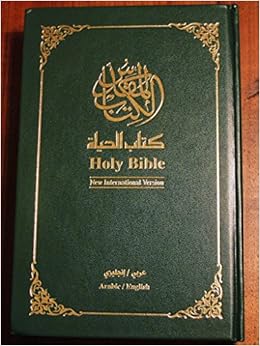
When we have the Spirit of Jesus among us, we can overcome the barriers that different languages and cultures tend to place between people. When we seek the One by whom all things hold together, we can begin to experience the "undoing" of Babel. It can happen at a simple dinner table, where grace and peace are served along with the meal.
Saturday, 24 October 2015
Medication Mistakes
Medication mistakes happen far more often than we would like to think in hospitals. According to a 2005 report by Statistics Canada:
 It happened to me on Canadian Thanksgiving weekend. My daughter had an allergic reaction on her skin to an unknown substance, so I gave her a dose of liquid allergy medication meant for children. My daughter is thirteen years old, so she was at the high end of the dosage: three teaspoons. The reaction subsided for a time but returned the next day when we were travelling out of town for a family event.
In my disorganization, I set the medication on the table but not in my purse where it was supposed to go. Upon our arrival the rash worsened, but only then did I realize I had left the bottle of medicine behind.
I was able to find a pharmacy a short walk from where we were. I grabbed a package from the shelf that was in the form of a liquid because my daughter has an aversion to swallowing pills. However, this time it was not a liquid meant only for children; it was called "elixir" and had dosages for children up to adult. For a teaspoon I was delighted that I had a plastic spoon in my van. Still in "maximum dose" mode, I gave my daughter four spoonfuls of the liquid.
Almost instantly her hives disappeared, but at dinner she was acting extremely tired. When my husband asked me how much medication I had given her, I said, "Four teaspoons."
He wondered what the suggested dose was, and I pointed out "2-4 teaspoons." Then he asked to see the spoon I had used. Using water from the pitcher at our restaurant table, he showed me that the capacity of this spoon was equivalent to a tablespoon, three times as much as intended.
I felt sick. How could I have done this to my child? I had read the label and yet I had made a major mistake. My sense of familiarity with an over-the-counter drug had kept me from being careful and wise.
Thankfully there were no other adverse affects on my daughter, and her hives have not returned at all.
I have no way of proving this, but I believe that God in his providence is able to hold back the full extent of the consequences of mistakes we make. Many medication mistakes at home or in hospitals may not even be noticed by God's grace, depending upon the drugs involved.
That knowledge and belief should not make me careless; however, I have a sense of deep gratitude that my daughter's story did not have a tragic ending. I have also learned to have a fresh and healthy respect for medicines, prescription and over-the-counter.
[1]http://www.statcan.gc.ca/pub/82-003-x/2008002/article/10565-eng.htm
Nearly one-fifth (19%) of hospital RNs reported that medication error involving patients in their care had occurred "occasionally" or "frequently" in the past year. [1]However, medication mistakes are also likely to occur in homes. Over-the-counter products give dosages and warn patients about taking more than the recommended amounts, but labels can be misread. Even with the best of intentions, medication mistakes can occur.

In my disorganization, I set the medication on the table but not in my purse where it was supposed to go. Upon our arrival the rash worsened, but only then did I realize I had left the bottle of medicine behind.
I was able to find a pharmacy a short walk from where we were. I grabbed a package from the shelf that was in the form of a liquid because my daughter has an aversion to swallowing pills. However, this time it was not a liquid meant only for children; it was called "elixir" and had dosages for children up to adult. For a teaspoon I was delighted that I had a plastic spoon in my van. Still in "maximum dose" mode, I gave my daughter four spoonfuls of the liquid.
Almost instantly her hives disappeared, but at dinner she was acting extremely tired. When my husband asked me how much medication I had given her, I said, "Four teaspoons."
He wondered what the suggested dose was, and I pointed out "2-4 teaspoons." Then he asked to see the spoon I had used. Using water from the pitcher at our restaurant table, he showed me that the capacity of this spoon was equivalent to a tablespoon, three times as much as intended.
I felt sick. How could I have done this to my child? I had read the label and yet I had made a major mistake. My sense of familiarity with an over-the-counter drug had kept me from being careful and wise.
Thankfully there were no other adverse affects on my daughter, and her hives have not returned at all.
I have no way of proving this, but I believe that God in his providence is able to hold back the full extent of the consequences of mistakes we make. Many medication mistakes at home or in hospitals may not even be noticed by God's grace, depending upon the drugs involved.
That knowledge and belief should not make me careless; however, I have a sense of deep gratitude that my daughter's story did not have a tragic ending. I have also learned to have a fresh and healthy respect for medicines, prescription and over-the-counter.
[1]http://www.statcan.gc.ca/pub/82-003-x/2008002/article/10565-eng.htm
Saturday, 10 October 2015
Thanksgiving Menus
The traditional menu for Canadian Thanksgiving borrows a great deal from the iconic meal shared by the Pilgrims and the Native Americans in 1621. The roasted turkey, potatoes, along with the vast array of vegetables including squash and corn, come from this harvest festival in New England about one year after the Mayflower first arrived in the new world.
Certainly, the idea we associate with Thanksgiving is abundance. For our large gatherings, we prepare much more food than we can possibly eat at one sitting. People take second (or third) helpings, putting off their diets for the sake of the festival.
Even before the Pilgrims and further to the north, there was a service of Thanksgiving in 1578 led by pirate/explorer Martin Frobisher giving gratitude to God for his care and provision after a dangerous voyage in search of the Arctic Northwest Passage. This Thanksgiving, which did not occur in October or November, was focused upon protection rather than harvest.
I wonder sometimes if we are missing some of the context of these first North American Thanksgivings. Consider the following:
Certainly, the idea we associate with Thanksgiving is abundance. For our large gatherings, we prepare much more food than we can possibly eat at one sitting. People take second (or third) helpings, putting off their diets for the sake of the festival.
Even before the Pilgrims and further to the north, there was a service of Thanksgiving in 1578 led by pirate/explorer Martin Frobisher giving gratitude to God for his care and provision after a dangerous voyage in search of the Arctic Northwest Passage. This Thanksgiving, which did not occur in October or November, was focused upon protection rather than harvest.
I wonder sometimes if we are missing some of the context of these first North American Thanksgivings. Consider the following:
- Records from Martin Frobisher's ships show that each week his crew would receive meat on four days and no meat on the other three. The other rations on board included flour, oats, dried beans and biscuits. One would imagine that any Thanksgiving meal accompanying the first Canadian Thanksgiving in 1578 would not have been a lavish affair.
- The fact that turkey was served at the first American Thanksgiving was not due to marketing or people saving up for weeks to purchase such an expensive type of poultry. Turkey was part of the menu because wild turkeys were abundant in the place where the Pilgrims and Natives were living. They could easily hunt them, and the meat was tasty. In that same spirit (choosing something for my Thanksgiving menu simply because it is abundant), I intend to find a way to elevate kale. Just today, we harvested four "trees" of it from our vegetable garden. (See photo)
- Both of these original Thanksgiving events were not about a nebulous feeling of gratitude one stirred up once a year. They were part of a daily lifestyle of giving God the credit for any blessings that come our way. Thanksgiving needs to be directed somewhere: any celebration that is missing the element of acknowledging God's role in our lives will fall short of the true meaning of the holy-day.
- The first celebrants of Thanksgiving had experienced difficulties most of us could only imagine. Frobisher and his crew daily faced hostile weather and were far from home and family, and yet they could celebrate. The Pilgrims had survived one year in the new world, but many of their number had succumbed to disease and starvation. We do not celebrate Thanksgiving only if everything in our lives is going well. We celebrate it even though there are really difficult things in our lives.

Saturday, 19 September 2015
The "Imagine" Reality Check: Orphan Care
After having taken a short break, I am resuming this series. Singer-songwriter John Lennon wrote a song decades ago asking people to imagine a world with no religion as though it would automatically lead to peace and harmony among people. Through this series I have been exploring the contributions of Christianity to Western culture, some of which have become such "givens" that many do not realize that they came to us thanks to people properly living out their religion.
 |
| Freerange stock photo |
It may be surprising to most people that the word “religion”
is hardly ever used in the Christian Bible.
One place it is used is in the highly practical letter of James. Here we find these words:
Religion that God our Father
accepts as pure and faultless is this: to look after orphans and widows in
their distress and to keep oneself from being polluted by the world. (James 1:27)
In this post, I will focus on the way Christians from the
beginning were people who looked after orphans in their distress.
Jesus Christ and
his first followers lived in the context of the Roman Empire. However, they lived within a Jewish enclave
of that empire, where many laws, traditions and ways of living continued to be
practiced even if they were not universally shared. When the first followers were dispersed
throughout various pockets of the Roman Empire, they may have found a Jewish
synagogue or a small worshipping community of Jews by a river side (see Acts 16:13),
but Greco-Roman patterns and ethics dominated all of society.
Greco-Roman
attitudes regarding the value and status of women, children and slaves affected
their everyday interactions with each other and colored their sense of justice
as well. Because infants and children were
not valued, it was common for them to be abandoned at birth if the parents did
not want to raise them. Such children
either died of cold or hunger or were seized by slave traders who would exploit
them. Christians began to rescue and embrace these infants, raising them with “the
aid of the community fund.” [1]
Apostolic
Constitutions (eight treatises dated from 375 to 380 (Book IV) Section 1. On
Helping the Poor refer to the practice within the church for members to adopt
and raise any Christian child whose parents had lost their lives whether by
martyrdom or natural causes. Orphanages
as an institution began to be opened in the East at the same time as St. Basil
was founding hospitals in the early fourth century.
A prominent
Christian who cared for children in orphanages was George Muller, a German-born
missionary who came to London to evangelize Jews. Eventually he settled in Bristol at a time
when a cholera epidemic was decimating the population. So many children were left without parents
that Muller took action and started Orphan Homes. Eventually there were five of them, without
any fundraising or asking for money. Muller
strongly believed that the Lord would provide financially without his approaching
any individuals or groups. In all over 10,000 children were cared for in Muller’s
homes. [2]
Christian missions
overseas have also often focused on the need to provide care for vulnerable
orphans. This has taken various forms,
including adoption (for example, the cases of missionaries Amy Carmichael and Gladys
Aylward in India and China, respectively), establishing orphanages, and more
recently by organizing and supporting foster care within the child’s own
community (such as is done by Visionledd in African nations ravaged by
AIDS).
As I was
researching orphan care, one of the things that popped up in my browser search
was a news story about “the first atheist orphanage.” A group of humanists announced in the
February 2015 article that they would open the first atheist orphanage and
would rely on crowd funding. I suppose
this really is newsworthy because it admits that faith has motivated the vast
majority of homes for orphans.
Furthermore, it shows that through all the years of human history it has
taken thousands of years before someone of no religion felt inclined to launch
such an initiative.
[1] Will Durant, Caesar
and Christ (1944), p. 598; also E. Gibbon, The Rise and Fall of the Roman Empire (1900), p. 480.
[2] See www.Muller.org
[3] See the full article at http://motherboard.vice.com/read/the-worlds-first-atheist-orphanage-just-launched-a-crowdfunding-campaign
Monday, 14 September 2015
Coptic Object Lesson

On Saturday afternoon while attending a birthday party I met a Coptic family: a father, mother and two teenage daughters. The father and younger daughter had been in Toronto that morning at a celebratory conference in honour the festival of Nayrouz. The younger daughter held out her hand and showed us she had saved a pit from a date she had eaten there. The older daughter immediately knew why she would do this, and the father quickly explained it to me. For Coptic people, the fruit of the date palm has a special significance. It reminds them of the martyrs in the following ways:
- The outside of the date is reddish-brown, which signifies the blood and suffering of the martyrs
- The inside of the date is white (as you can see on the image). This represents the purity of the hearts of those who remained true to their faith even to death.
- The seed of the date is hard, and it reminds Coptic Christians of the firm and resolute faith that enabled the believers to face a martyr's death.
I later learned that the importance of martyrs carries over to the Coptic calendar in one other way: instead of beginning the counting of years at the birth of Jesus Christ, they begin at AD 284 and designate each year A.M. (Anno Martyrum), in the year of martyrs. Thus, in the traditional Coptic calendar the year is 1732. I realize that the math does not work exactly, but there must be a good reason for that.
Tuesday, 8 September 2015
Spreading Papers before the LORD
This is a devotion I shared with my staff colleagues on the morning of the first day of school, but I think it can be applied to many contexts.
There is an interesting story in the book of 1 Kings about what a king does when he receives a threatening letter. After reading the message from his enemy King Sennacherib, King Hezekiah of Judah goes to the temple and spreads the letter out before the LORD. He begins his prayer like this:
“Lord, the God of Israel, enthroned between the cherubim,you alone are God over all the kingdoms of the earth. You have made heaven and earth. 16 Give ear, Lord, and hear; open your eyes, Lord, and see; listen to the words Sennacherib has sent to ridicule the living God." (2 Kings 19:15-16)
I love this image of the king physically spreading out this parchment before the LORD. Of course, God knows what the message is and does not need to read it. It was a way for the king to surrender the situation to God and to ask Him to deal with it.
Spreading out papers before the LORD does not have to be limited to those which are sent to us and cause us distress. Certainly, an unexpected bill or a note sharing bad news would also be appropriate to spread before the LORD and ask him for help.
This summer, I literally did the same thing with the class lists as I was preparing them. I spread these pages out on my desk and asked God to bless the arrangements and the students in each class.
Other papers we might spread out before God are our daily and yearly plans, our communications with parents or our marking rubrics. It's a good practice we can do as a way of surrendering our work and efforts to God's service.
Prayer based on Psalms 5 & 90
Give ear to our words, O Lord.
You have been God before creation; you have guided the formation of our school a generation ago. We are well aware of our smallness in the grand order of things.
This morning you hear my voice; this morning we lay our requests before you and wait in expectation.
Lead us O Lord in your righteousness; make straight your way before us. Surround us with your favor as with with shield.
As we have prepared many days for this one, please bless your start to a new school year. Please calm the anxious hearts of students and parents and staff. We humbly ask you to establish the work of our hands for us, for without You we can do nothing.
In the name of Jesus, Amen
There is an interesting story in the book of 1 Kings about what a king does when he receives a threatening letter. After reading the message from his enemy King Sennacherib, King Hezekiah of Judah goes to the temple and spreads the letter out before the LORD. He begins his prayer like this:
“Lord, the God of Israel, enthroned between the cherubim,you alone are God over all the kingdoms of the earth. You have made heaven and earth. 16 Give ear, Lord, and hear; open your eyes, Lord, and see; listen to the words Sennacherib has sent to ridicule the living God." (2 Kings 19:15-16)
I love this image of the king physically spreading out this parchment before the LORD. Of course, God knows what the message is and does not need to read it. It was a way for the king to surrender the situation to God and to ask Him to deal with it.
Spreading out papers before the LORD does not have to be limited to those which are sent to us and cause us distress. Certainly, an unexpected bill or a note sharing bad news would also be appropriate to spread before the LORD and ask him for help.
This summer, I literally did the same thing with the class lists as I was preparing them. I spread these pages out on my desk and asked God to bless the arrangements and the students in each class.
Other papers we might spread out before God are our daily and yearly plans, our communications with parents or our marking rubrics. It's a good practice we can do as a way of surrendering our work and efforts to God's service.
Prayer based on Psalms 5 & 90
Give ear to our words, O Lord.
You have been God before creation; you have guided the formation of our school a generation ago. We are well aware of our smallness in the grand order of things.
This morning you hear my voice; this morning we lay our requests before you and wait in expectation.
Lead us O Lord in your righteousness; make straight your way before us. Surround us with your favor as with with shield.
As we have prepared many days for this one, please bless your start to a new school year. Please calm the anxious hearts of students and parents and staff. We humbly ask you to establish the work of our hands for us, for without You we can do nothing.
In the name of Jesus, Amen
Subscribe to:
Posts (Atom)