Popular Posts
-
Last fall my husband and I celebrated our twentieth wedding anniversary. One of the slightly odd things we did when we got together with...
-
War Room, the latest faith-based film by the Kendrick brothers, highlights the importance of prayer. Audiences across North America wer...
-
Last night I was privileged to hear youths from Paraguay perform orchestral pieces on instruments made from items reclaimed from the land...
Monday, 13 July 2026
How Grammar reflects Life
Thursday, 13 March 2025
"Everything is Plastic"
My mother tells a story about me as a young child visiting my aunt's house. On one of the tables was an appealing fruit basket. I took one of the apples and attempted to bite into it, only to be told it was "plastic." Some time later, I allegedly composed an original song with the repeated line, "Everything is plastic." My childish brain could not comprehend what benefit there was in setting out fruit that did not nourish.
This week I was visiting somewhere else and came upon this tray of plastic fruit on a counter. I was not deceived this time.
Plastic fruit is a fitting metaphor when so many of the things that surround us are not real. The voice on the other end of the telephone is not always a real person, but a recording or sounds generated by a computer. The so-called candid photos on our social media feeds are curated and embellished. Computers having what seem like life-like conversations with people was tested out as early as the 1960's [1], and many chatbots appear on websites to "help" us. We have an obsession with the virtual world and its technology, but it does not nourish us. Loneliness has recently been called an epidemic, and a social worker named Jake Ernst "blames technology and social deterioration for this trend" [2].
Discerning what's real and what's plastic/fake or at best a representation of reality is not just a problem that started with personal computers or smartphones. Projecting an image of ourselves that is better than reality has been a temptation humans have struggled with from the beginning. Societies do the same, rewriting history to cover up the unpleasant parts and to kindle greater loyalty.
So, how to we wade through the media and the messages to arrive at anything resembling reality?French mathematician René DesCartes in the 1600's proposed doubting everything. He then rebuilt a system of reality based on his own senses and rationality: "I think, therefore I am." Maybe I'm not the only one that finds this human-centred, individualistic approach less than satisfactory.
I offer a few ideas that have helped me.
- Whenever possible, connect with people face to face. Real people are not just voices, faces, or the words they generate. Real people are embodied, complex beings with emotions and histories. We're able to take in more of this complexity when we meet in person. We're also more able to take in this complexity when we listen at least as much as we speak.
- Interact with the real, created world whenever possible. Yes, Alexa or Google can tell you what the weather is like, but stepping outside and experiencing it is more real than their descriptions. Looking at photographs of birds and butterflies can be enriching, but looking out your window or walking in your neighbourhood and focusing your eyes on 3-dimensional wonders will nourish you in a deeper way. Allowing children to watch someone else play Minecraft or to play Minecraft themselves may have a place, but building with tangible objects like blocks or LEGO widens their sensory inputs and horizons.
- Remind yourself that everything presented to you comes from a limited perspective. It can never give you the complete picture because reality is so complex. Pay attention to the bias of the source. Sometimes, it helps to look behind the bias to see if there is something to be gained for the source by including particular details or ignoring or downplaying others.
- As a person of faith, I'm finding it increasingly crucial to be humble and to admit when I'm not sure or don't know enough to be an authority on topics outside my expertise. Even when I might be considered an expert by being an eye-witness of an event or situation, I can't claim to be the only authority. I need to admit that others have experienced it differently. If we disagree about some aspect, I need to give others the benefit of the doubt, unless there's evidence of malice.
[1] Between 1964 and 1967, Joseph Weizenbaum developed ELIZA. It was a computer program that could carry on a seemingly natural conversation with a therapy client, who typed in thoughts and responses to its prompts.
[2]Global News article about increasing loneliness consulted social worker Jake Ernst among others.
Tuesday, 14 November 2023
A Learning Journey: Science
A book entitled Flourishing Together: A Christian Vision for Students, Educators and Schools contains questions for reflection at the close of each short section or chapter. One of these questions caught my imagination when I read it during the summer months:
"Have you ever shared your learning journey with your students? What effect might that have?"
I decided to share my learning journey of science with my students on the first day of classes this past September. To simplify it a little and provide a framework for the students to reflect on their own learning journey of science, I told of my journey in four parts.
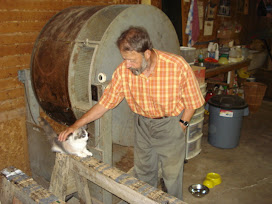
A person who sparked my interest in science. For me, that was my father. As a farmer, he cared about living things in the fields and barns. He also took me on many walks in the woods where he pointed out different trees and plants. Although he did not have much formal education, he had interesting facts to share about the past and present uses of each plant or tree.My dad attentive to a creature
2. An early experience with science. When I was in elementary school, we sometimes had special elective classes in the winter time. The elective that captured my attention was not my own, but my sister's. She was part of a small group led by an embryologist who taught at the University of Toronto. He led the students in creating individual science fair projects. My sister worked on hers at home. Her topic was "blue babies" and a life saving operation developed to make their hearts work properly. She made models of the heart out of blue and pink playdough, and I can still picture her display board.
3. A more recent experience with science. During the second COVID school lockdown I was also teaching science. One of the remote lessons I developed was for students to spend an hour outdoors and record all their observations of living and non-living things and their interactions. To provide a "sample" observation record, I spent time beside a storm pond close to my home. This experience stands out to me as a peaceful time of connection with nature and with God, during a turbulent period in history.
4. Recent interest. I shared with my students some things I had recently learned about the Great Lakes from an audiobook I had finished a couple of weeks earlier. The Death and Life of the Great Lakes by Dan Egan further developed my understanding of the effects of human innovations like industrialization, canals, waterways, sewage systems, and international trade on the five freshwater lakes at the border of Canada and the United States. The plants, fish and other living things in these lakes have been affected by pollution and invasive species. Living near the Great Lakes gives me a responsibility to know and care about their well being as a habitat.
Even if you are not a student, this post may give you time to reflect on your learning journey in science or some other area of study. People, events and experiences all contribute to our learning, and I am grateful for them.
Wednesday, 20 May 2020
Inspiration for Remote Learning
Colossians 2:5
For though I am absent from you in body, I am present with you in spirit and delight to see how disciplined you are and how firm your faith in Christ is.
2 Timothy 1:3-4
I thank God, whom I serve, as my ancestors did, with a clear conscience, as night and day I constantly remember you in my prayers. Recalling your tears, I long to see you, so that I may be filled with joy.
Romans 1:11-13a
I long to see you so that I may impart to you some spiritual gift to make you strong— that is, that you and I may be mutually encouraged by each other’s faith. I do not want you to be unaware, brothers and sisters,[d] that I planned many times to come to you (but have been prevented from doing so until now)
1 Thessalonians 2:17-18
But, brothers and sisters, when we were orphaned by being separated from you for a short time (in person, not in thought), out of our intense longing we made every effort to see you. For we wanted to come to you—certainly I, Paul, did, again and again—but Satan blocked our way.
Exodus 3:3-5
So Moses thought, "I will go over and see this strange sight--why the bush does not burn up."
And when the LORD saw that he had gone over to look, God called to him from within the bush, "Moses, Moses!"
And Moses said, "Here I am."
"Do not come any closer," God said. Take off your sandals, for the place where you are standing is holy ground."
In 1994, when I was hired for my first teaching job, it was at a school opening its doors for the first time that September. The position was to teach Grade 6, 7 and 8 in the same classroom, with nine pupils. To encourage myself that such a task was indeed possible, I spent a week in May observing in my uncle's Grade 4-8 classroom in Renfrew. Seeing firsthand how someone else was capably teaching and managing an atypical arrangement gave me a bit more confidence.
Where do we find models like this to encourage us during remote learning? Aside from the inspiration we can gain from one another, which is nonetheless helpful, and from reading about teachers in China, I've been struck by two other sources.
New Testament Epistles
Mr. Rogers
Monday, 1 July 2019
Tickets to add to a Summer Fun Jar- most relevant to Kitchener-Waterloo
Listen to an episode of Adventures in Odyssey
7 pm weeknights 93.7FM
Or whitsend.org and click on “LISTEN NOW.”
Go to a farmer’s market and buy a fruit or vegetable you never tried before.
Put a movie on hold at the public library.
With a parent’s permission, take apart something that is broken to see its hidden parts.
Count the coins in your family coin jar and together decide on a charity to give it to.
Surprise someone with a tea or hot chocolate.
Make pizza using Naan or other flat bread as your base.
Go outside and take pictures of 6 different kinds of flowers.
Make a smoothie.
Make an ice cream cone
Make your own popsicles
Make a fruit salad.
Ask your parent or caregiver to tell you a story about their childhood
Write a note or card to one of your cousins and put it in the mail with a stamp.
Offer to do yard work for one of your neighbours.
Send Mrs. Mostert a postcard to the school’s address. She will get it.
What would a cameleopard look like? Try to draw one.
Visit the KW Art Gallery at 101 Queen St. N in Kitchener. It’s free. Kwag.ca
Make a robot using supplies in your blue box.
Find the oldest book in your house and read 3 pages of it.
Reread one of your favourite books.
Visit a little library close to you. Find them at llkw.ca/honour-roll.
Go to a community centre and find out about their programs
Write in your journal or notebook.
Take a hike and notice different birds and plants
Wash your bicycle.
Ride your bike around the block.
Call a grandparent on the phone, with permission
Create an outdoor obstacle course.
Make an indoor treasure hunt for someone else that has at least 7 clues and hiding places.
Think of 5 different exercises and stretches. Do them to some music that you like.
Learn a new song on the recorder, piano, ukulele, drums or some other instrument.
Play a game of UNO.
Plan a playdate with a friend, including the snacks you will share.
Walk to the park or playground close to your house.
Plan your own small yard sale or bake sale.
What day of the month is it? Read the Psalm in the Bible that has the same number.
Write out a line from a song that you like using an ERASABLE marker on the mirror. When someone notices it, offer to clean the mirror.
Learn to count to 10 in a new language. Teach someone else to do it too.
Sign out a musical instrument from the central branch of the Kitchener Public Library. Have fun with it, while taking good care of it
Read the chapter from Proverbs that matches the date today. Which proverb sticks in your mind?
After checking the weather forecast, set up a tent in your backyard and make plans to sleep in it that night.
Take a city bus to a park you like.
Take the ION train with an adult.
Blow bubbles outside.
Visit a farm.
Write in a journal.
Play catch with a tennis ball outside.
Plan a picnic.
Trampoline.
Organize a baseball game in a park near your house
Follow a Bob Ross painting tutorial.
Make paper airplanes.
Draw a cell and label 8 parts.
Go on a walk and bring a plastic bag to pick up garbage with.
Do a walk around the block and pay attention to one God made thing.
Draw a map of a room of the house that suggests a way to rearrange the furniture in it.
Make a cootie catcher.
Make a menu, using food already in the fridge, for tomorrow that you will help make.
Walk around your house and look closely at the framed photos and artwork. Which do you like best and why?
Read part of a newspaper.
Lay on the ground outside and watch the clouds.
Return an abandoned shopping cart to the store.
Go into your backyard and identify 10 different sounds you can hear.
Do a word search.
Stargaze.
Start a jigsaw puzzle.
Play Scrabble.
Make popcorn.
Sing a song you remember from music class.
Make an encouraging card or note for someone in your house.
Play with Lego.
Get out your skipping rope to skip and learn some new skipping techniques.
Make a recipe for the perfect sandwich. Add the ingredients you don’t have to the shopping list and make it soon.
Make cartoon creatures using fingerprints.
Find toys you no longer use and decide who to give them to.
Colour with crayons.
Go to the library. Visit an aisle you have never looked in before.
Choose a song to play after dinner.
Colour with pencil crayons.
DANCE!
Make hopscotch on your sidewalk or driveway.
Climb a tree.
Read a comic book.
Create a no-bake dessert you can make for your family.
Do a chore secretly.
Put a movie on hold at the public library.
Catch insects and examine them.
Find a map of Ontario and look for a town with an interesting name and write a short story explaining how you think it got its name.
Read a chapter of a non-fiction book.
Learn how to sign your name in American Sign Language.
Go up and down your street and look at the mailboxes people have. Make your own mailbox awards for the nicest ones (1st, 2nd, 3rd) and leave them in the winners’ mailbox.
Make biscuits.
Record your voice reading a poem. Play it at dinner.
Research a tropical fruit on computer. (Ideas: dragon fruit, durian, bread fruit, pineapple)
Make a reusable HAPPY BIRTHDAY poster for your family to hang up every time there is a birthday.
Read a chapter of a book in your room.
Organize the pantry.
Go swimming
Make your own slime.
If you got a new pet, what would you name it and why? Draw a picture of it.
Hide a penny somewhere in your house and see who will find it.
Look through an old photo album or your baby photos.
Write a story based on something that happened to you this summer.
Decorate a cardboard box.
Create a crossword puzzle and give it to a family member for them to try.
Take pictures of six insects and try to find out their names.
Plan and host a bake sale on your street. Make posters or flyers.
Play a song on the recorder.
Learn to count to 10 in a different language.
Test out all the markers in your house. Take the “dead” ones to STAPLES for Terracycling.
Sign out a drawing book from the library and sharpen your pencil.
Tell jokes.
Make fruit salad.
Visit a cemetery. Notice designs of headstones.
Plan a sleepover.
Make a note or card for someone and mail it with a stamp.
Make your own drum set using household items.
Go on a hike.
Take a bubble bath.
Build a blanket fort inside.
Invent a new sport. What equipment do you need? What are the rules? Who can you teach it to?
Set a reading goal and surpass it.
Sort your books into alphabetical order.
Write a kind message with sidewalk chalk.
Think of 5 acts of kindness and do them all.
Research how to make shadow animals with your hand and make a shadow show.
Find an interesting word in the dictionary and make a fun drawing about it.
Bake some cookies with a parent’s help.
Make a video based on a story you like.
Learn how to make a friendship bracelet.
Have a nap outside in the shade.
Tuesday, 1 January 2019
Reading Strategies and my books of 2018
There are specific reading strategies that help us to get the most out of the books we read. As I go through each strategy, I will highlight a book or two I read in the past year which especially required this strategy of me.
Visualization
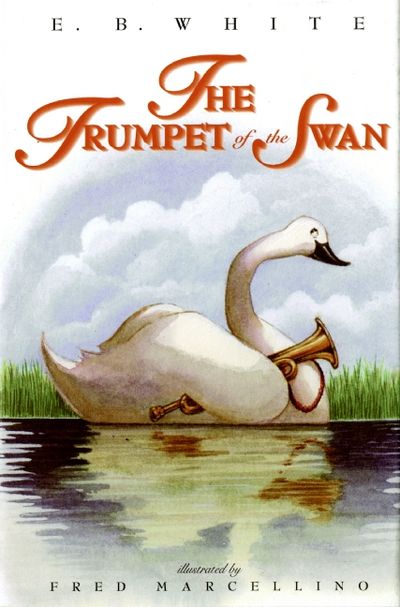
describes people and place, they come to life in our imaginations. Two books I read last year that became vivid in my mind were The Trumpet of the Swan by E B White and Stolen Child Marsha Forchuk Skrypuch. The first book highlights Sam Beaver, a boy who comes to a remote part of Canada and who becomes bound up with a family of swans. The wilderness setting was a bit similar to a green space near my suburban home. When Louis the swan leaves his family to find his voice, the sights and sounds are told in lovely detail. Stolen Child is set at the same time period that my father and his siblings came to Canada as immigrants. Some of the scenes of the country school and the simple and practical home built by new settlers I imagined to take place on and around the property of my dear aunt and uncle who lived on a farm in the Niagara Peninsula.
Prediction
Connections
Every story we hear or read connects to our lives in some way because there are common experiences in being human. Stories can also connect to other stories we've heard or to world events we are aware of. The books that led to many connections for me in 2018 were Meet Viola Desmond by Elizabeth MacLeod and The Soul of Shame by Curt Thompson. Both are non-fiction books. The first one is a picture book that tells the story of African-Canadian, Viola Desmond. In 2018, this woman's image was revealed on the Canadian $10 bill. Learning about her story enabled me to connect it to the story of American civil rights activist, Rosa Parks. Both women did not give up their seats in order to assert their human rights, and both were punished at the time. However, in time, they have both come to be admired and exonerated. The book The Soul of Shame provided me with connections because all humans deal with guilt and shame. Hearing the author speak at two different conferences helped me make deeper connections between what he said in his book and my own life experiences.